All about knitting!
Discover the history of knitting
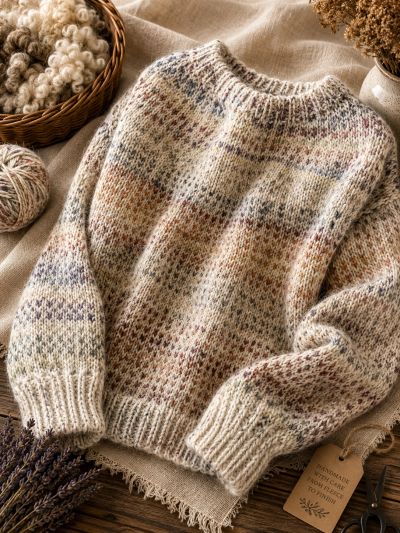
Knitting has played an important role throughout history, serving both practical and cultural purposes. Although its exact origins are uncertain, early forms of knitting can be traced back centuries, with knitted items being used to provide warmth, comfort, and protection. Over time, knitting became an important part of everyday life, particularly in communities where people made their own clothing and household items. During times of war and economic hardship, knitting also became a way for communities to support soldiers and families by producing essential clothing. As knitting spread across different countries and generations, it developed into not only a useful craft but also an important form of cultural tradition, creativity, and social connection. Today, its history continues to influence the way knitting is practised and appreciated around the world. By not only providing warmth and protection in colder climates to also becoming pieces of wearable art, knitting is a sustainable process that can give its users years of comfort whilst being kind to nature. There is nothing 'fast fashioned' when it comes to the knitting world. That is just the way we like it.

The Process of Knitting
Knitting is a craft that uses yarn and needles to create fabric by forming a series of connected loops. The process begins by making a row of loops, called stitches, onto one needle. A second needle is then used to pull yarn through these loops, creating new stitches. The two basic stitches are the knit stitch and the purl stitch, which can be combined in different ways to create patterns, textures, and designs. As more rows of stitches are added, the knitted fabric becomes longer and can eventually be shaped into items such as scarves, sweaters, blankets, and hats. Knitting requires coordination and concentration because the yarn must be held at the correct tension to produce even stitches. Through repeating these simple movements, knitters can turn a strand of yarn into a flexible and useful piece of fabric.

Timing is Everything
The amount of time it takes to hand knit a garment can vary greatly depending on its size, complexity, yarn thickness, knitting technique, and the knitter’s experience. A simple scarf may take around 10–20 hours to complete, while a jumper or cardigan can take anywhere from 20 to 100 hours or more for the knitting process alone. More detailed garments with complex patterns, cables, or colour work or finer pieces can take significantly longer because they require greater concentration and more careful planning and generally more stitches. Beginners may also need additional time as they learn to maintain an even tension and work efficiently. Overall, hand knitting is a time-consuming process that requires patience and dedication, which is one reason handmade knitted garments are often valued for the skill and effort involved in creating them. When you add the step by step process of shearing, processing fleece, dyeing or adding artificial colours, skeining and spinning the wool, you can see how the time adds up. For this reason, you are not just buying an off the rack item, you are buying a piece of art - one that will always provide you warmth and comfort so long as you look after them the way they are meant to be. For care instructions, click here.
Individuality is guaranteed
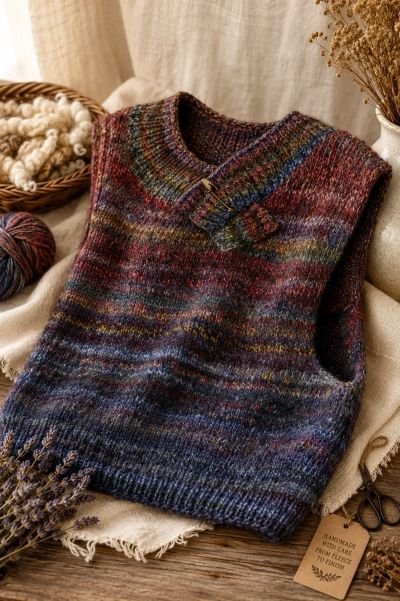
No matter how perfect conditions are replicated, there are no two projects that will be identical. No two fibres from a goat or sheep are the same just as not two people's hair are identical. No two colour baths come out exactly the same no matter how carefully you follow the steps, measure the granules and replicate the conditions. This guarantees that no two finished projects will be the same. Our team can certainly replicate patterns ensuring that if you want more than one piece that are similar, that is achievable however never will they be identical. Honestly though, who wants to have something identical when you are dealing with the true rarity of Heritage fleeces. Every item has one of a kind properties which give them the perfect amount of difference. Just as the Mona Lisa can be replicated, It would never be as spectacular as the original piece.